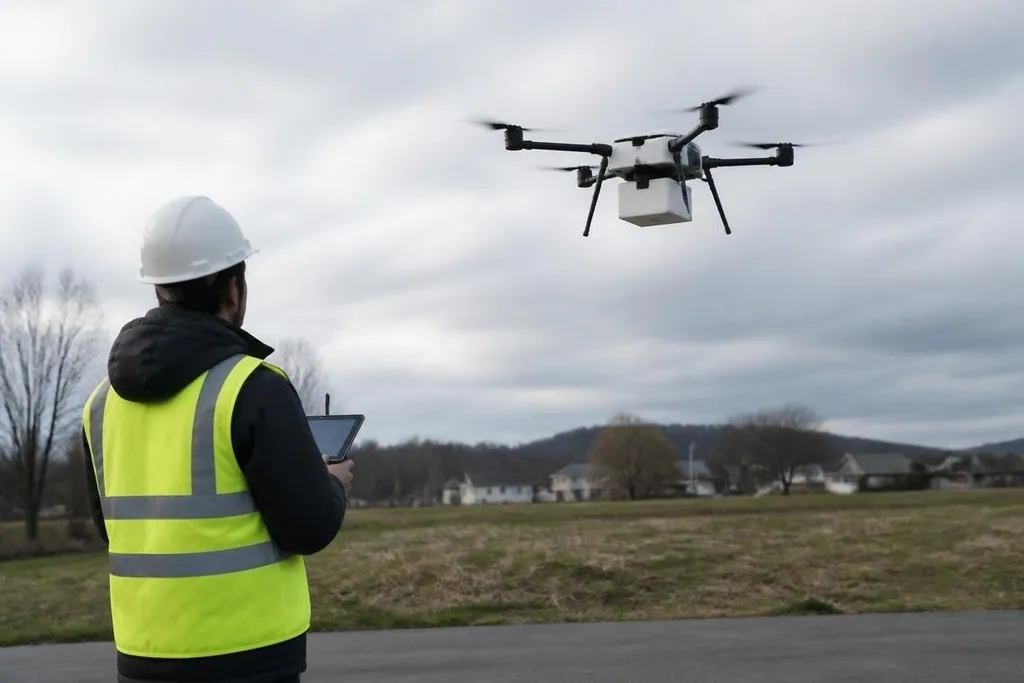
A delivery drone can lift a parcel, fly a planned route, and return to its launch point. The hard part starts when weather changes, a landing area is blocked, or a person walks into the flight path. For operators, better means repeatable deliveries with clear limits, not a polished flight video.
- Payload comes first: the parcel, packaging, and safety margin all count.
- The route needs a fallback: autonomous flight must handle blocked landing areas and lost links.
- The service needs proof: a working aircraft still has to fit local air rules and daily operations.
Payload changes the aircraft
A drone built for medicine has a different job from one built for groceries. The design must account for the parcel’s mass, shape, temperature needs, and handoff method.
A box that swings below the aircraft can change its balance during flight, so the carrier needs a tested mounting point and a clear weight limit.
That limit should include the container. If a company lists a payload in kilograms, an operator needs to know whether that figure covers only the package or the package plus the carrier. The answer affects range, battery use, and the number of deliveries possible from one launch site.
Multirotor aircraft can rise and land without a runway, which suits homes, stores, and small depots. Fixed-wing designs can cover longer routes, but they need more space or another method to take off and land. The aircraft type sets the shape of the delivery network before software enters the discussion.
Flight control matters more than the demo
The route needs more than a GPS line on a map. The aircraft may use cameras, LiDAR, satellite positioning, and onboard maps to locate itself and avoid objects. These tools have different limits: cameras need enough light, LiDAR can struggle with some surfaces, and satellite signals can weaken near buildings.
The system also needs a safe response when a sensor gives poor data. It may slow down, hold position, return to the launch point, or land at a planned backup site. Each response changes the risk to people below and the cost of a failed delivery.
Flights beyond visual line of sight, often shortened to BVLOS, add another layer. The operator cannot watch the aircraft directly, so the drone needs a tested link, clear alert rules, and a response for lost communication. Those details matter more than a top speed that customers may never see.
At the doorstep, the aircraft still needs a safe landing area and a clear way to pass the package to a person. Robot24.com can put the route, landing setup, test date, and remote-control step beside the flight result before the next section looks at that handoff.
The delivery handoff is part of the flight
The parcel still needs to reach the right person. A drone might lower it on a cable, land at a marked spot, or release it into a secure box. Each method brings a different failure point. A cable can move in wind, a landing zone can become occupied, and a box can reject the parcel if its door or sensor fails.
The operator should record the full task, from loading to handoff and return. Useful measures include delivery time, completed flights, aborted flights, battery swaps, damaged parcels, and missed handoffs. Without those numbers, the aircraft may look ready even when the service still needs a person at every stop.
Privacy also needs a clear rule. Cameras used for navigation can record homes, roads, and people. The delivery plan should state what the drone records, how long it keeps that data, and who can access it.
What remains unproven
The hardest claim to check is not that a drone can fly. It is that the same service can run across many days, locations, and weather conditions without adding hidden labor. That proof needs logs from real routes, not only selected demonstrations.
I’d judge a delivery-drone project by its failed-flight process before its best flight. A company that reports why a route stopped, how the parcel was recovered, and what changed next gives operators something they can plan around.
Use this checklist before you compare aircraft or service plans:
- Define the parcel: record mass, size, temperature range, and handoff method.
- Map the route: note buildings, trees, power lines, launch points, and backup landing areas.
- Check the link: set the lost-communication response and test it away from the launch site.
- Count the people: include loading, monitoring, recovery, customer support, and maintenance.
- Set weather limits: write down wind, rain, heat, and cold limits before the first route.
- Log every failure: record the cause, recovery time, parcel result, and software or hardware change.
The next useful comparison will be a route log with those fields filled in, not a race leaderboard. Until operators can see completed flights, failed flights, and labor per delivery, the better drone is still an open question.